In the context of digital transformation becoming a vital requirement for the economy, the State Bank of Vietnam's Regional Branch 1 has proactively taken a step ahead by organizing an in-depth training program on the application of artificial intelligence (AI) in its operations. Beyond simply updating technology, the program demonstrates a commitment to innovating management thinking, improving operational quality, and gradually realizing the "smart banking" model within the central banking system.
On December 18th, at the headquarters of the State Bank of Vietnam, Branch 1, an intensive training program on the theme "Applying Artificial Intelligence (AI) to Business Operations" took place in a lively, open, and highly practical atmosphere. This training activity is considered a strategic step, demonstrating the Branch's long-term vision in modernizing management, enhancing staff capacity, and promoting digital transformation in line with the requirements of economic and financial development in the era of Industry 4.0.
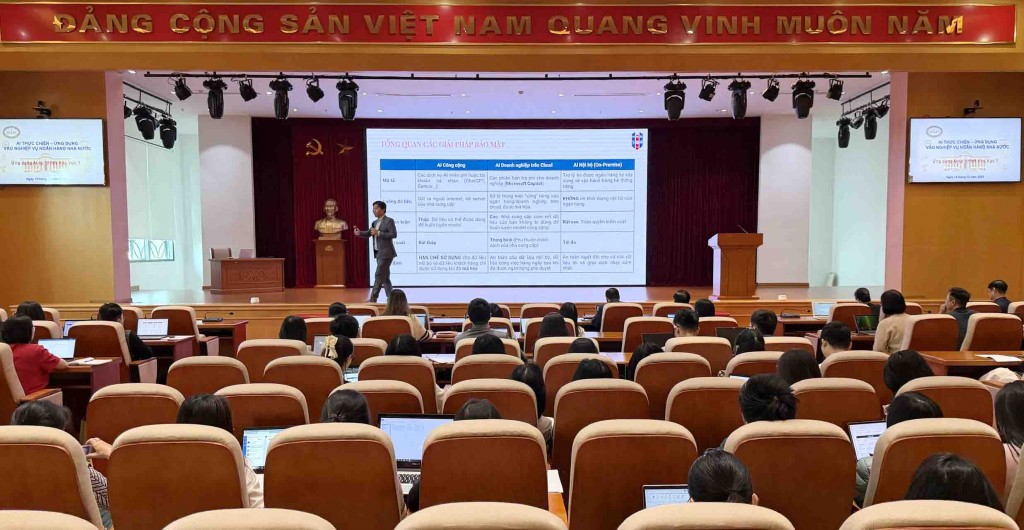
The State Bank of Vietnam, Regional Branch 1, organized an intensive training program on the topic of "Applying Artificial Intelligence (AI) to operational activities" for its officers and staff.
In the context of the banking sector facing significant pressure from demands to improve the efficiency of monetary policy management, enhance transparency, standardize data, and respond quickly to macroeconomic fluctuations, the application of AI is seen as a key tool to optimize resources, shorten processing times, and improve the quality of decision-making.
The proactive implementation of AI training for its staff by the State Bank of Vietnam's Regional Branch 1 demonstrates that digital transformation thinking is not only about technological infrastructure but also begins with people and the way work is organized.
Speaking at the event, a representative from the Board of Directors of the State Bank of Vietnam, Region 1 Branch, emphasized that AI is no longer a technology of the distant future but is already clearly present in socio-economic life and modern management activities.
In the banking sector, AI is progressively changing how information is processed, data is analyzed, and policy management is supported. Mastering and effectively utilizing AI will help minimize operational errors, improve information accuracy, and support leaders in making timely decisions based on rich and intelligently processed data.
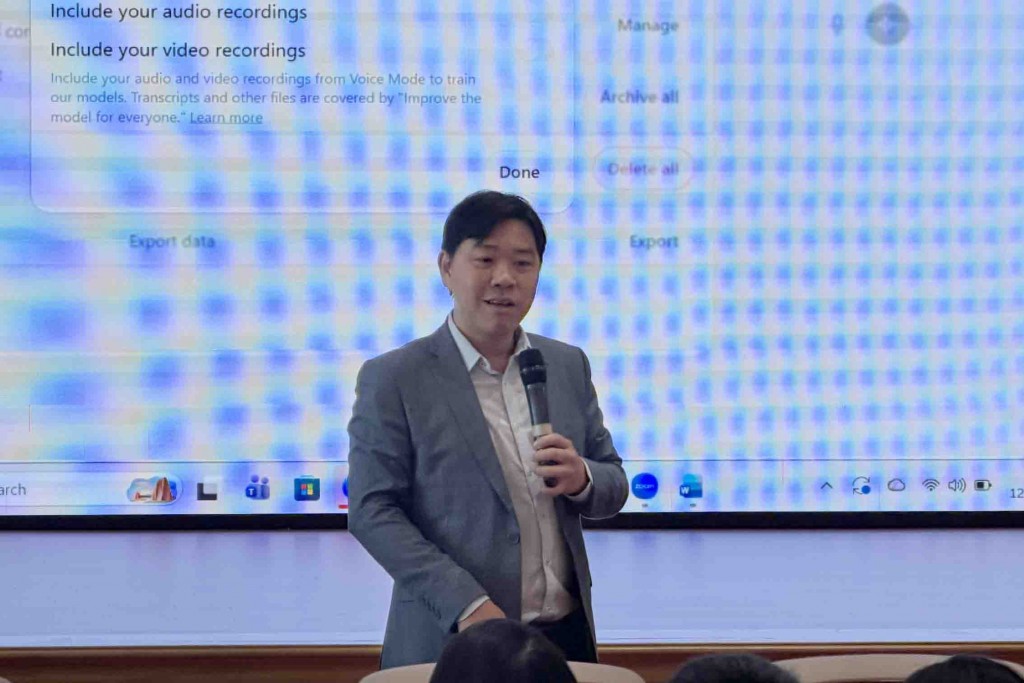
Expert Le Hoai An, lecturer at the Banking Faculty, Ho Chi Minh City University of Banking, shared his insights with officials and staff of the State Bank of Vietnam, Branch 1.
The distinguishing feature of this training program lies in its practical approach, focusing on job requirements and viewing AI as a direct support tool for daily management, operations, and business activities. Instead of simply introducing technology, the course aims to change the mindset of staff towards a proactive, flexible, and data-driven approach, thereby gradually laying the foundation for a "smart banking" model within the central banking system.
In line with that direction, the Party Secretary and Director of the State Bank of Vietnam's Regional Branch 1, Ms. Nguyen Thi Hoa, has paid close attention to and decisively directed the implementation of the training program, considering it a key task to improve the quality of the staff, linking training with practical requirements and the goal of comprehensive digital transformation. According to Ms. Nguyen Thi Hoa, the application of AI not only helps improve work efficiency but also contributes to standardizing processes, increasing transparency and the quality of advice, meeting the increasingly high demands in monetary and banking management and operation in the context of a rapidly developing digital economy.
From drafting documents and compiling reports to analyzing data and planning work, AI is being introduced as a companion tool, freeing intellectual labor from repetitive tasks so that officials can focus more on analytical thinking and policy planning.
Ms. Nguyen Thi Hoa, Secretary of the Party Committee and Director of the State Bank of Vietnam's Regional Branch 1, affirmed that organizing AI training not only aims to improve the personal skills of staff but also to build a modern, professional working environment that quickly adapts to technological changes and new management requirements.
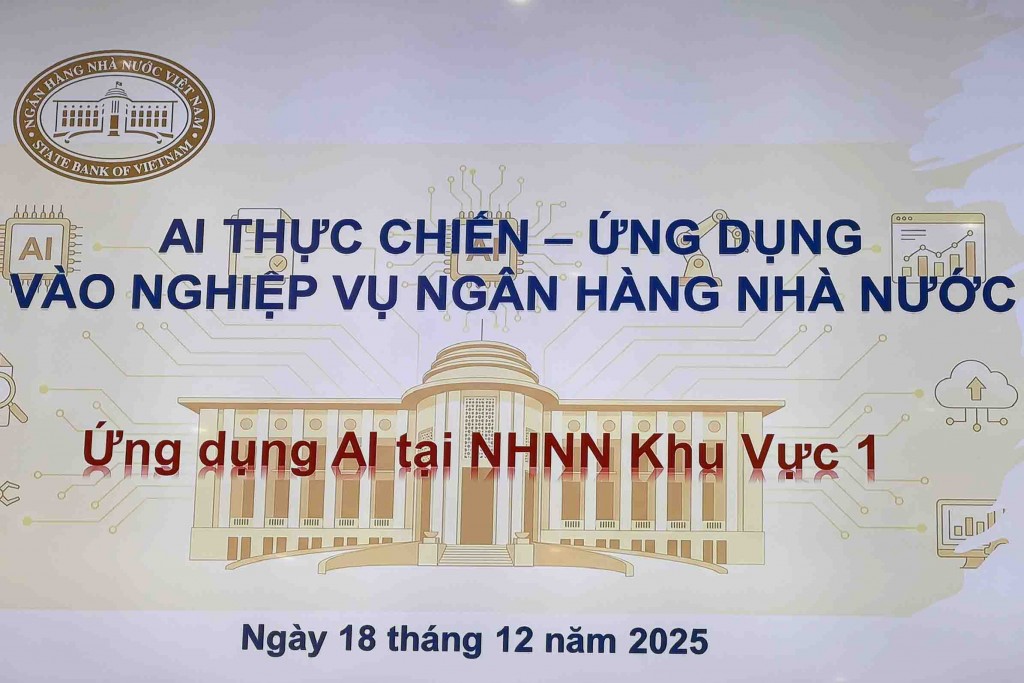
An intensive training program on the topic of "Applying Artificial Intelligence (AI) to Business Operations" was conducted specifically for the State Bank of Vietnam, Regional Branch 1.
According to the Director of the State Bank of Vietnam's Regional Branch 1, digital transformation in the banking industry must be implemented synchronously, from institutions and processes to people, with AI being one of the important tools to realize this goal.
The training program is specifically designed for State Bank of Vietnam officials, closely adhering to the unique operational characteristics of the Central Bank and the requirements of state management in the monetary, credit, and banking sectors. The training content focuses on the controlled, effective, and secure application of AI to directly support professional work.
One of the topics of particular interest to the trainees was the application of AI in document management and administrative work. Through the introduction of large language models, staff were guided on how to use AI to summarize long reports, quickly analyze document content, support the drafting of legal documents, and quickly search the industry's regulatory system. This is of practical significance in the context of the increasing volume of documents and reports in the banking industry, requiring fast processing while ensuring accuracy and rigor.
In addition, data analysis and economic forecasting are also considered a highlight of the course. AI is introduced as a tool to support the aggregation and processing of statistical data, identify regional economic trends, and thereby contribute to improving the quality of credit forecasting and policy advice.
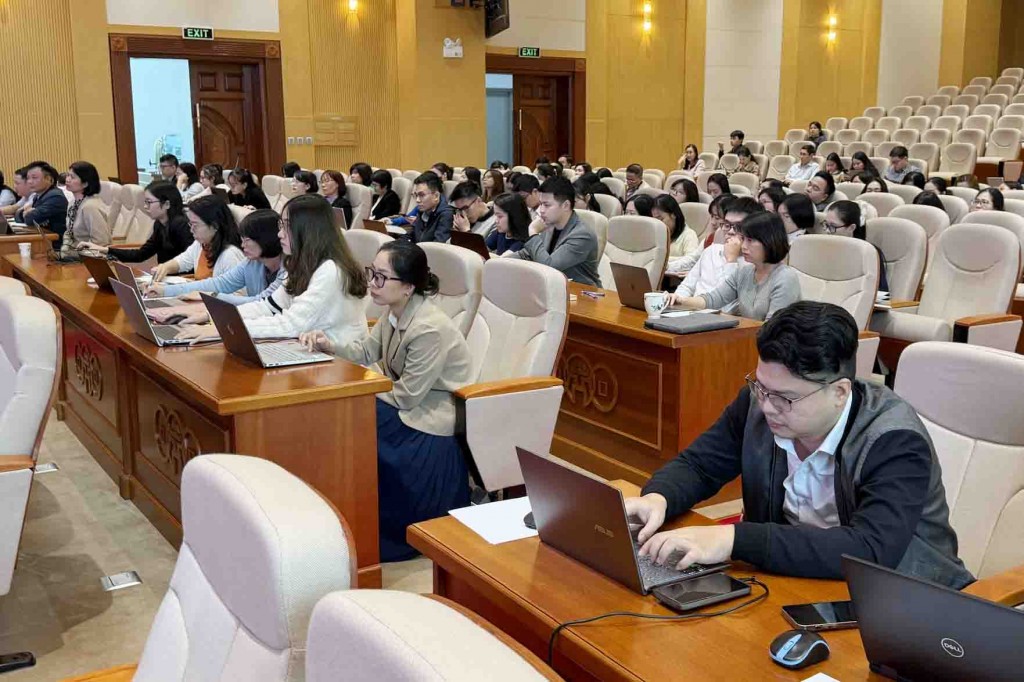
A large number of officials and employees of the State Bank of Vietnam, Branch Region 1, participated in the training course.
In a volatile economic environment, effectively leveraging data and applying intelligent analytical tools will help the State Bank of Vietnam enhance its policy response and macroeconomic management capabilities.
Another highly practical topic is "Prompt Engineering," or the art of constructing commands to maximize the power of AI tools like ChatGPT and Claude.
Through specific examples, learners are guided on how to formulate questions, requests, and contextualize information so that AI can effectively support work planning, analyze complex problems, and suggest solutions. This is considered a new skill, but it is becoming increasingly necessary for employees in a digital work environment.
In particular, the issue of information security and privacy is emphasized throughout the training program. Given the highly sensitive nature of banking data, the use of public AI platforms must strictly adhere to regulations on information security and privacy.
Trainees are equipped with the knowledge to identify risks, set limits on AI usage, and ensure that internal information is not leaked, contributing to maintaining discipline and system security.
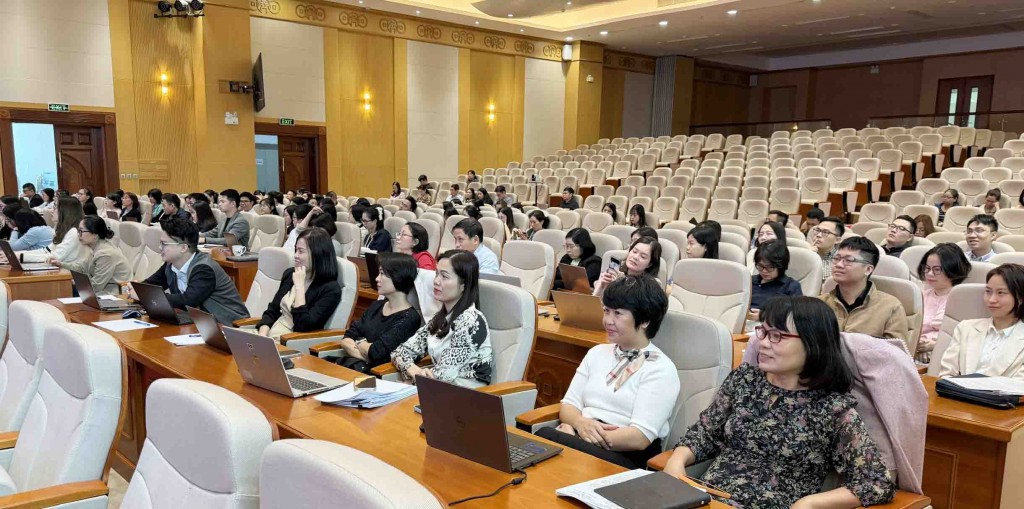
Officials and staff of the State Bank of Vietnam, Regional Branch 1, participated in the training course.
During the training course, expert Le Hoai An, lecturer at the Banking Faculty, Ho Chi Minh City University of Banking, shared that AI does not replace humans in banking operations but plays the role of a supporting tool, helping people work smarter and more efficiently. According to the expert, the core value of AI lies in its ability to process data quickly and suggest scenarios, while the final decision must still be based on the thinking, experience, and responsibility of bank staff.
The training session became lively as participants proactively raised specific business problems from their practical work. Staff from the Accounting and Payment, Inspection and Supervision, and General Affairs departments discussed with the instructors how to apply AI to work processes that are considered complex and time-consuming. These frank and open exchanges helped clarify the potential and limitations of AI in the banking industry.
Sharing his experience at the course, student Pham Anh Khoa said that previously, compiling periodic reports often took hours, even days, due to having to process multiple data sources and manually review them.
However, with the AI tools taught in the program, trainees can quickly build a preliminary draft in just a few minutes, freeing up more time for in-depth analysis and valuable recommendations. This experience helps staff realize that AI does not increase work pressure, but rather opens up space for creativity and enhances the quality of intellectual work.
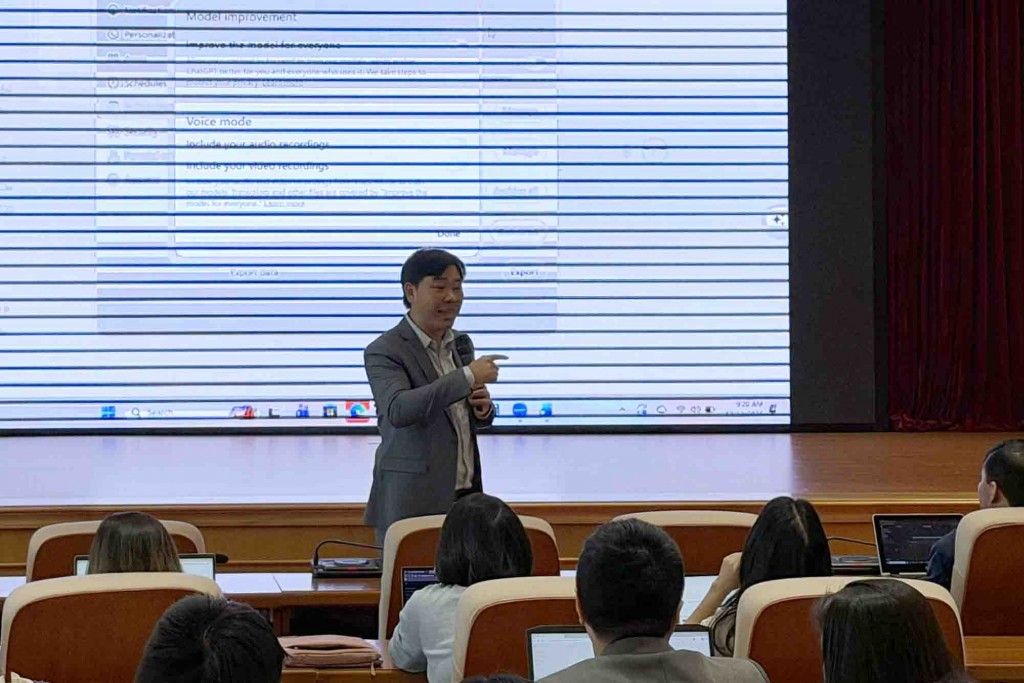
Expert Le Hoai An, lecturer at the Banking Department, Ho Chi Minh City University of Banking.
From a management perspective, the training program also contributes to changing the perception of digital transformation among staff. Instead of viewing digital transformation as a top-down requirement, AI is seen as a practical support tool, linked to the specific benefits of each individual and unit. This shift in perception will create a solid foundation for the sustainable and effective implementation of digital transformation.
Following the training course, the Board of Directors of the State Bank of Vietnam, Branch 1, expressed their hope that each participating officer would become a "digital nucleus," proactively disseminating knowledge and experience in applying AI within their unit. In the future, the Branch plans to continue organizing in-depth training sessions, tailored to each department and business area, aiming to integrate AI into daily workflows.
Proactively equipping its staff with AI knowledge and skills not only helps the State Bank of Vietnam's Regional Branch 1 to successfully fulfill its professional duties, but also contributes to affirming the pioneering role of the State Bank of Vietnam in building a digital government and developing the digital economy.
In the broader economic landscape, where data and technology are becoming crucial resources, such proactive and systematic steps are a vivid testament to the transformation from mindset to practical action, from the pressure for innovation to the driving force for sustainable development.